
Dryer Vent Cleaning
Clear the lint so the dryer runs cool, fast, and safe.
Learn moreSometimes you don't need a cleaning — you need to know whether the dryer vent is safe and built right, with documentation in hand. This inspection-only service checks the vent material (no fire-prone flex foil), the run length, the terminations, and actual airflow, then hands you a written report for insurance or HOA records. It's the no-fuss way to confirm everything's in order. And if we do find a problem, you'll know exactly what it is before it becomes a hazard.
You can't manage what you don't measure, and a dryer vent is the most overlooked unmeasured system in the average home. Our crew earned its reputation on inspection-grade rigor — Level-1/2/3 chimney evaluations done by the book — and we carry that same instrument-driven discipline to the duct behind your dryer. A Space Fireplace Services dryer vent inspection is no glance-and-guess: it's a camera scope, an airflow measurement, a code audit, and a written report you can act on, sell on, or file with an insurer.
Why inspect a vent you can't see into? Because the failures that matter are invisible from the laundry room. A run quietly 60% blocked still dries clothes — slowly, hot, and dangerously. A section disconnected inside a wall vents into the cavity and breeds mold for months before anyone notices. A foil transition or an over-length run that breaks code goes unnoticed until a real-estate inspector flags it or a lint fire makes it everyone's problem. Measurement turns all of that from a surprise into a managed line item.
Here's what the inspection actually includes. We borescope the full duct run — transition, in-wall path, every elbow, and the exterior or roof termination — to locate crushed sections, disconnects, nesting, and packed lint, capturing the camera image for your file. We take an anemometer or static-pressure reading on the exhaust to quantify airflow and the percentage of blockage, so "it seems slow" becomes a hard number. We audit the run against IRC M1502 — total developed length, elbow count, material, and termination clearance — and document where it complies and where it doesn't. And on gas dryers we verify the exhaust is clear and not back-drafting combustion byproducts, a safety check most vent companies don't even offer.
The deliverable is what separates a premium inspection from a sales pitch. You receive a written report with the airflow figures, annotated borescope images, a code-compliance summary, and a prioritized recommendation — clean, repair, reroute, or all-clear — with no pressure to buy a thing. If the vent is fine, we tell you it's fine and put it in writing. That's the posture of a brand that doesn't need to manufacture work.
This hub spans the full inspection scope: standard inspection and airflow testing; the IRC M1502 length/transition compliance audit a buyer, seller, or HOA needs for a transaction; the dryer fire-hazard safety assessment for a clogged or over-long run; concealed-duct locating; and the gas-dryer exhaust/CO safety check. It's the right first call when you've just bought a home, when dry times have crept up, when you smell mildew near the laundry, or when a maintenance plan should run on data instead of a calendar.
Because our methodology is documented, the inspection approach and report format don't vary from job to job — every report reads the same and carries the same weight. That consistency is exactly why discerning homeowners, property managers, and real-estate professionals standardize on us. The premium lives in the rigor and the paper trail, not in an upsell.
Map the full duct route and termination.
Check material, length, crushing, and code.
Test airflow with an anemometer.
Written findings + corrective recommendations.
We've worked on 1,000+ DFW homes over 10+ years. Dryer vents run on the same routine as our fireplace and chimney work: a written quote, photos of the run before and after, and the warranty in writing.
Code + fire-safety focused inspection
Flags foil/vinyl and crushed runs
Airflow measured, not guessed
Written report for landlords/insurance
A lint-choked dryer vent is a fire hazard the same way a dirty flue is, so it gets the same crews and the same standard: licensed and insured, with every run photographed before and after. We're the team you call when you want it done right the first time — no rotating subcontractors, no upsell pressure, no surprises. Same techs, same trucks, same standard.
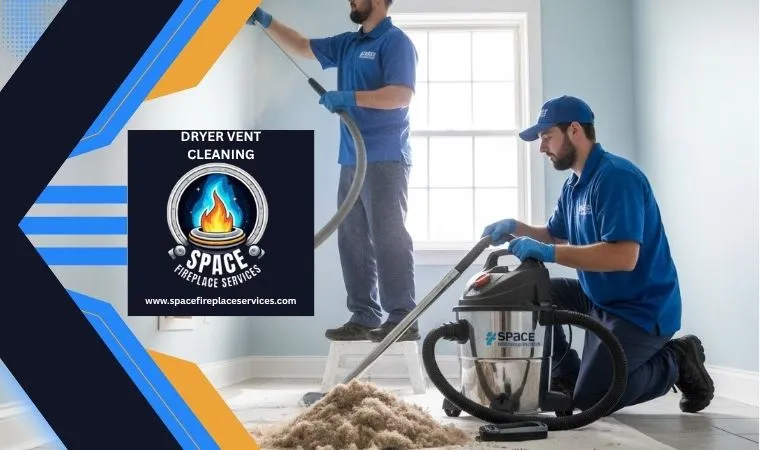
Once a year is the standard, and more often with heavy laundry volume or a long run that bends several times. Clothes dryers and washing machines figure in roughly 13,000 to 16,000 U.S. home fires a year, with failure to clean the dryer as the leading factor, and it's usually the lint and the duct, not the machine, that catch fire.
An inspection measures airflow and checks the duct's material, length, fittings, and exterior termination to determine whether cleaning or repair is actually warranted. Cleaning is the separate corrective step, done only when lint buildup or restricted airflow turns up, so paying for a blind cleaning with no inspection can mean paying for work you never needed.
Loads that take more than one cycle to dry, a hot dryer cabinet or laundry room, a burning smell, and lint gathering around the exterior vent hood are the warning signs. Each one points to restricted airflow, which makes the dryer run hotter and is the mechanism behind most dryer fires.
It is. Code calls for rigid or semi-rigid metal duct; thin foil and plastic accordion duct sag, trap lint, and are a known fire hazard, and many aren't even listed for dryer use. The transition duct behind the dryer should be UL-listed too and kept within the manufacturer's maximum length, which an inspection confirms.
No. The listed price covers the code and airflow inspection alone. If cleaning or a repair turns out to be needed, the cost depends on duct length, routing, and how much buildup is present, and you'll see it priced separately before any work begins.
Last reviewed:
Other services in the Dryer Vent category.
Free written quote. Same-week scheduling. 24/7 emergency response when you need it.
Active leak, animal in flue, post-fire damage, or smoke event? Real humans on the line 7 AM to 12 AM every day — replies in under 2 minutes. Tech dispatch within 2 hours during business hours, subject to crew availability after-hours.
Emergency line